

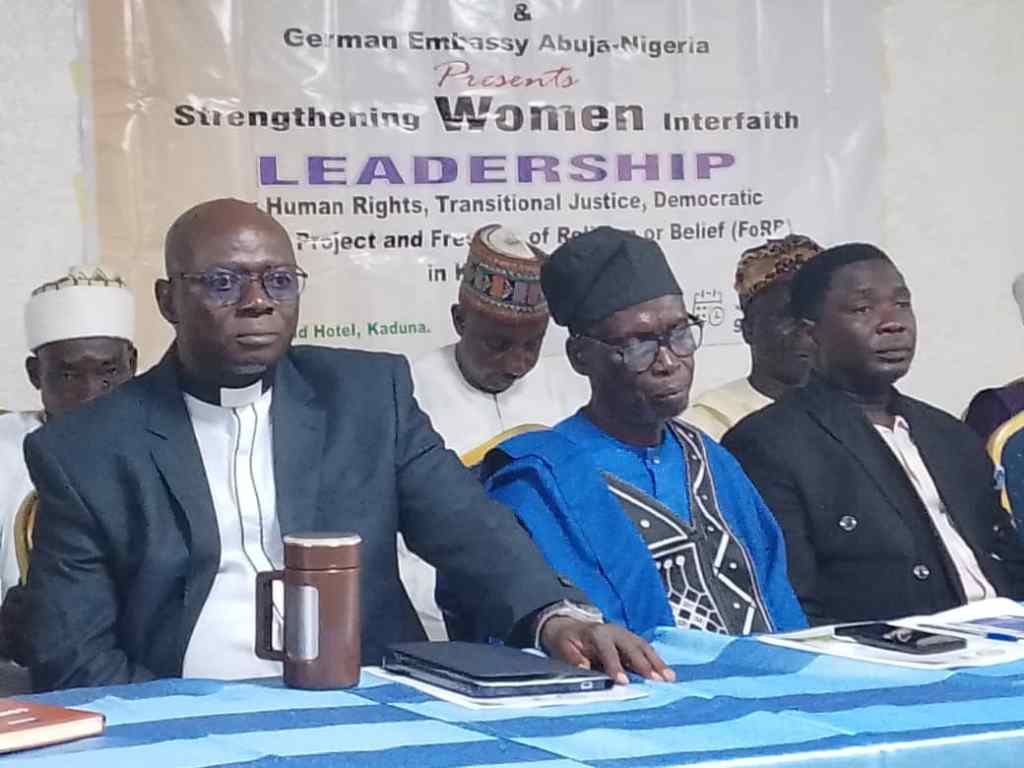
By Shebu Yahaya
Religious and traditional leaders have called for the greater use of faith-based teachings and indigenous conflict-resolution mechanisms as effective tools for promoting peaceful coexistence, combating hate speech and strengthening interfaith harmony in Kaduna State.
The call was made during the Freedom of Religion or Belief (FoRB) Conference, organised by the Interfaith Mediation Centre (IMC) with support from the German Embassy in Abuja.

The conference brought together religious leaders, traditional leaders, government representatives, civil society organisations, youth groups and development partners to discuss practical approaches to sustaining peace in the state.
Speaking at the conference, Pastor Yohanna Buru stressed the critical role of Christian leaders in fostering unity through responsible preaching. He urged pastors and church leaders to use the pulpit to promote messages of peace, forgiveness, restorative justice and respect for the dignity of every individual.
According to him, sermons that encourage tolerance and reconciliation can help bridge divisions, counter misinformation and prevent violence in communities that have experienced religious and ethnic tensions.
Also speaking, Dr. Imam Muhammad Sani Isah emphasised that Islam considers words to be a sacred trust, known as Amanah. He urged religious leaders, media practitioners and young people to reject inflammatory and abusive language, warning that hate speech often fuels misunderstanding and conflict.
Dr. Isah called for greater commitment to dialogue, reconciliation (Sulh), wisdom and compassion as essential principles for reducing sectarian tensions and strengthening peaceful relationships among diverse communities.
In his remarks, the Chairman of the Kajuru Peace and Reconciliation Committee, Hon. Patrick Maigari, advocated the revival of indigenous values and traditional methods of resolving disputes. He highlighted the importance of Zaman Tare—living together in peace—as a long-standing cultural principle capable of rebuilding trust and promoting reconciliation among previously divided communities.
Maigari noted that traditional institutions remain influential in many rural communities and should work closely with religious leaders to address disputes before they escalate into violence.
Delivering the keynote address, Pastor Dangiwa Bitrus encouraged participants to translate the lessons from the conference into practical actions within their communities. He urged stakeholders to champion tolerance, mutual respect and peaceful coexistence regardless of religious or ethnic differences.
The Freedom of Religion or Belief Project Coordinator, Mr. Samson Auta, said the initiative aims to empower men, women and young people with the knowledge and skills needed to strengthen interfaith cooperation, build trust among communities and contribute to sustainable peace and development in Kaduna State.
He explained that protecting freedom of religion or belief remains a vital component of building inclusive and resilient communities where people of different faiths can coexist peacefully.
At the end of the conference, participants called for stronger collaboration among religious leaders, government institutions, traditional rulers, civil society organisations and development partners to intensify peacebuilding efforts, address hate speech and safeguard freedom of religion or belief across Kaduna State.
They expressed optimism that sustained dialogue, responsible leadership and community-based peace initiatives would help reduce tensions and create a more peaceful and united society.
 FLASH POINT
Leave a comment