

By Shehu Yahaya, Kaduna
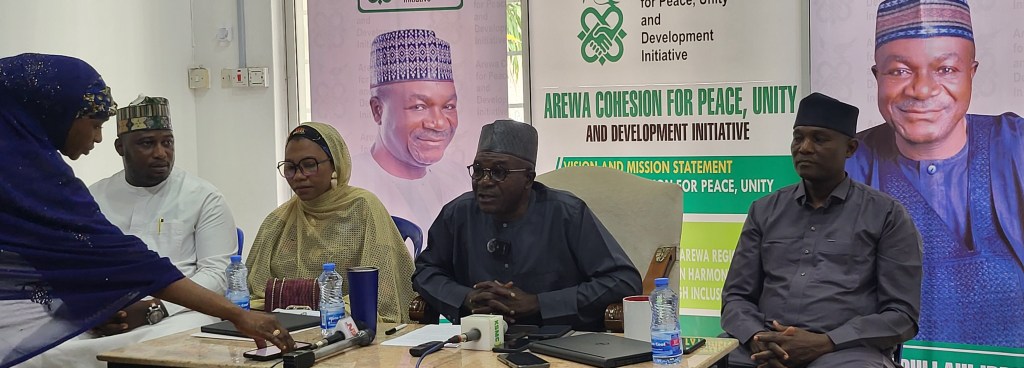
The Director-General of the Arewa Cohesion for Peace, Unity and Development Initiative, ( ACI) Dr. Abdullahi Idris, has called for stronger collaboration among governments, security agencies, traditional institutions and local communities to address the persistent insecurity in Northern Nigeria.
Dr Idris made the call while presenting the communiqué of the Arewa Awareness Summit on Unity Against Insecurity held at the Banquet Hall, Arewa House, Kaduna.
According to the communiqué, the summit identified insurgency, banditry, kidnapping, communal conflicts, farmer-herder clashes, illegal mining, arms trafficking and organised criminal violence as major threats to peace and development in Northern Nigeria.
He said , The participants observed that armed criminal groups were increasingly operating through cross-border networks and exploiting the country’s porous borders, stressing that military responses alone were insufficient to address the security challenges.
They also identified weak governance, poverty, unemployment, inequality, environmental pressures, proliferation of small arms, illegal economic activities and declining public confidence in institutions as major drivers of insecurity.
The summit therefore resolved that peacebuilding efforts should adopt a holistic approach combining security operations with good governance, justice, economic recovery, reconciliation and institutional reforms.
It called on governments at all levels to institutionalise community-based early warning and early response mechanisms involving traditional rulers, religious leaders, women, youths, farmers, pastoralists and community organisations.
The participants also advocated intelligence-driven and people-centred policing, with greater collaboration between communities and security agencies.
The communiqué called for the investigation and prosecution of financiers, collaborators, informants and political sponsors of criminal activities.
It further urged governments to strengthen traditional institutions and religious organisations to promote dialogue, mediation, moral values and peaceful coexistence.
On youth development, the summit called for increased investment in quality education, skills acquisition, entrepreneurship, employment opportunities and civic engagement as key components of regional peacebuilding.
The participants also demanded comprehensive reforms to the Almajiri system through access to quality education, social protection, vocational training and child welfare initiatives.
The summit urged governments to prioritise poverty reduction, economic inclusion and livelihood restoration in communities affected by conflict.
It called for the full participation of women in peacebuilding efforts, not only as participants but also as decision-makers, facilitators, resource persons and leaders.
Similarly, the participants resolved that persons with disabilities should be deliberately included in peacebuilding programmes, development planning, humanitarian interventions and future regional summits.
The summit also called for greater collaboration among Northern states in intelligence sharing, border security, conflict prevention and regional development initiatives.
It urged citizens to promote issue-based politics by electing competent, accountable and visionary leaders capable of addressing insecurity and advancing sustainable development.
The participants further called on governments to increase investment in education by integrating Western and Islamic educational systems to promote human capital development and social cohesion.
They also resolved that regional peace initiatives should be expanded into broader and more inclusive platforms capable of producing practical and measurable solutions to the security and development challenges facing Northern Nigeria.
The summit reaffirmed that the responsibility for securing the region rested not only with governments and security agencies but also with citizens, traditional institutions, religious bodies, civil society organisations, educational institutions and community stakeholders.
Participants expressed confidence that effective implementation of the resolutions would contribute to restoring peace, strengthening unity, rebuilding public trust and promoting inclusive development across Northern Nigeria.


Leave a Reply